free html website templates


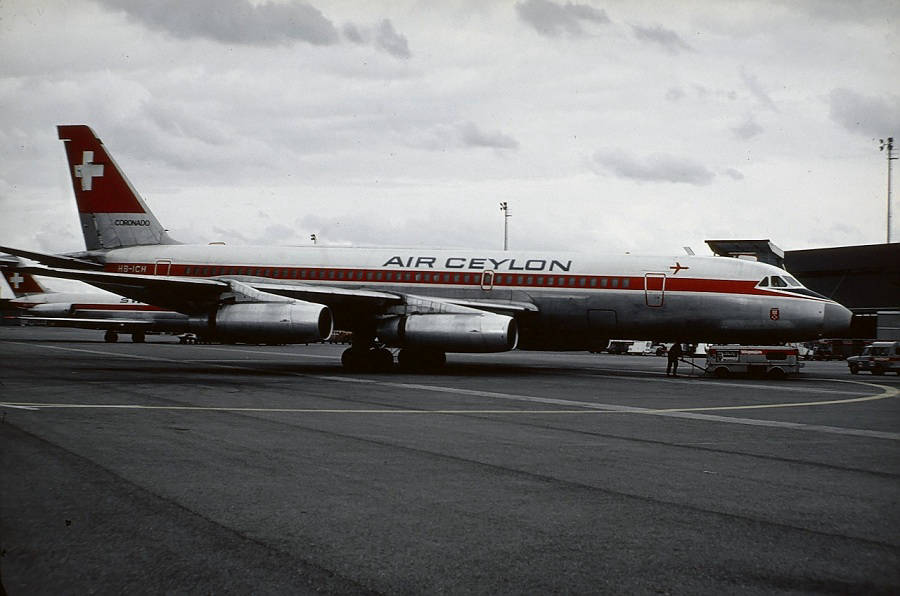
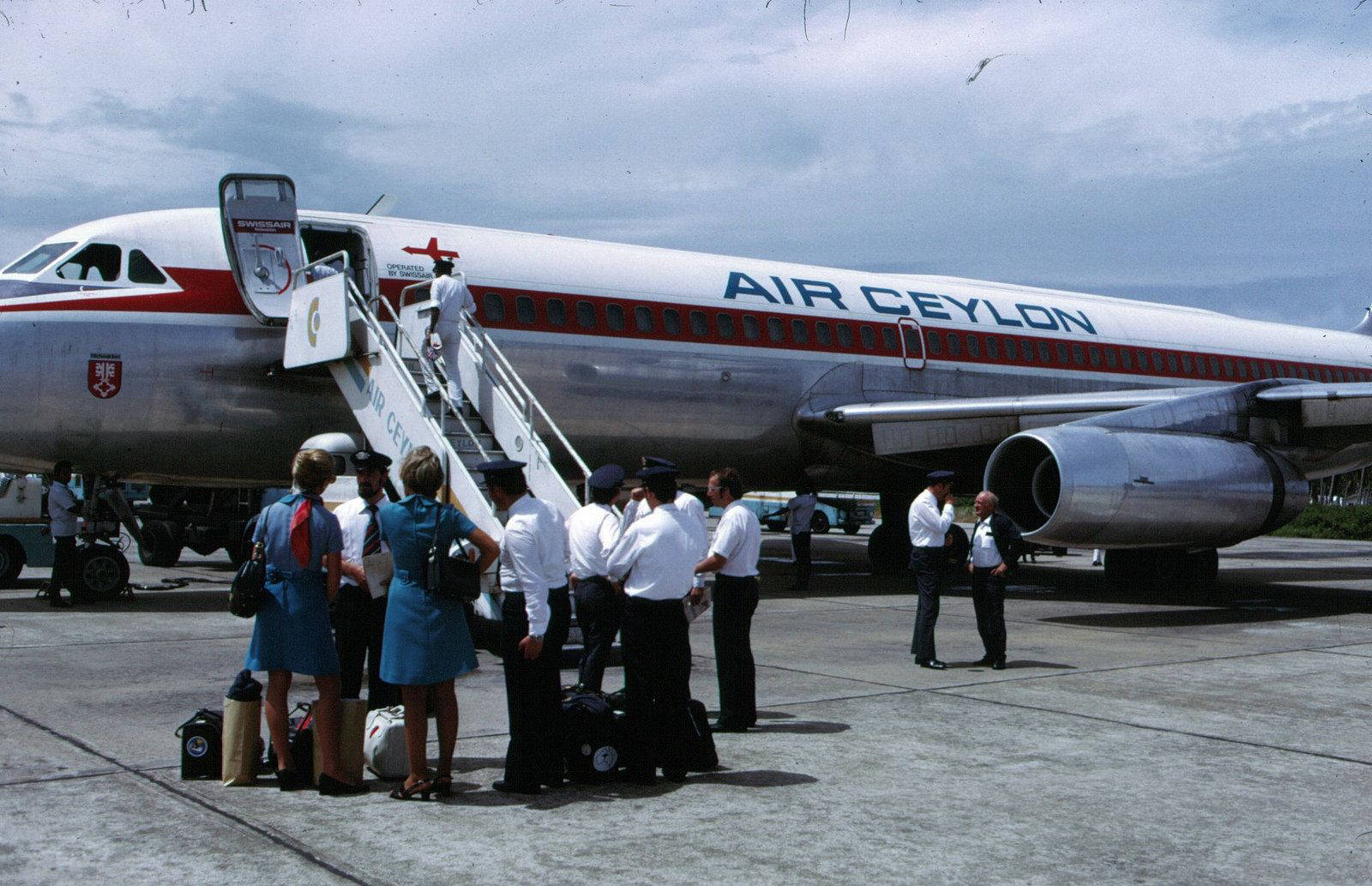
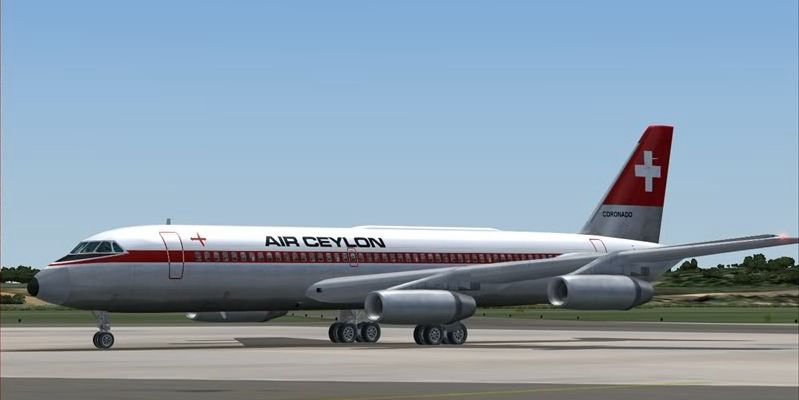
Air Ceylon
Convair 990 Coronado


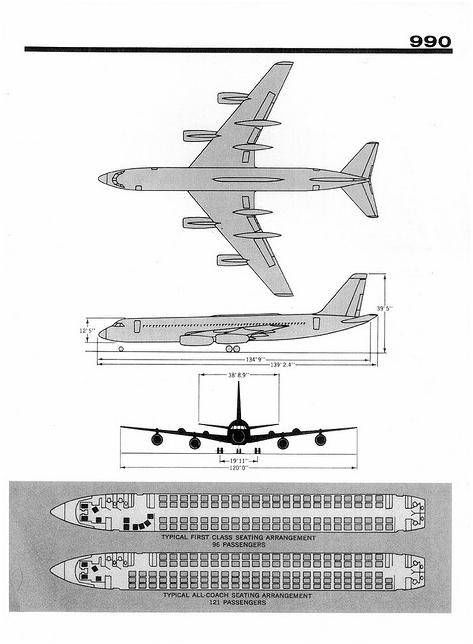
The Convair 990 Coronado was a narrow-body jet airliner produced by the Convair division of General Dynamics, a "stretched" version of their earlier Convair 880 produced in response to a request from American Airlines. The 990 was lengthened by 10 feet, which increased the number of passengers from between 88 and 110 in the 880, to between 96 and 121 (depending on the interior). This was still considerably fewer than the contemporary Boeing 707 (110 to 189) or Douglas DC-8 (105 to 173), although the 990 remained some 25 to 35 mph faster than either in cruise.

American Airlines requested that Convair design an aircraft for coast-to-coast flights, able to fly nonstop New York to Los Angeles against westerly winds. They wanted somewhat larger passenger capacity than the 880, which was the smallest of the first-generation U.S. jet airliners. The 990 entered production in 1961.

One change from 880 was the addition of large anti-shock bodies on the upper wings to increase their critical Mach and reduce transonic drag. This allowed the heavier 990 to go slightly faster than the 880, cruising at about Mach 0.91, making it the fastest passenger jet when it was built. Originally, there were plans to use the bulges as fuel tanks, but during test flights the extra weight caused the tanks to vibrate excessively. Instead, the inner set of bumps also served a secondary role as fuel dump for the fuel tanks in the fuselage.

The engines were also changed to the uprated General Electric CJ-805-23s, which were unique in that they used a fan stage at the rear of the engines, compared to the fan stage at the front of the engine as found in the Pratt & Whitney JT3D that powered the 990's competitors. The engine was a simplified, non after burning civilian version of the J79, used in military fighters. Like the J79, the CJ805 was very smoky.

Like the 880, 990s were later modified with a dorsal "raceway" added to the top of fuselage to hold the wiring for additional instrumentation.

4 × General Electric CJ805-23 turbofans, 16,100 lbf (71.6 kN) each

Maximum speed: 534 knots (Mach .91) (615 mph, 990 km/h) at 22,000 ft (6,095 m)
Cruise speed: 495 knots (570 mph, 920 km/h) at 35,000 ft (10,667 m)
Range: 4,700 nm (5,400 mi, 8,690 km)

Empty weight: 120,560 lb (54,690 kg)
Loaded weight: 255,000 lb (115,700 kg)

Length: 139 ft 5 in (42.49 m)
Wingspan: 120 ft (36.58 m)
Height: 39 ft 6 in (11 m)

Crew: 4 (2 pilots, flight engineer and radio operator/navigator)

Standard: Typically 96 to 121 passengers

Air Ceylon Aircraft Index

alkva

Of all things that Lindbergh’s great feat demonstrated, the greatest was to show us that a person could still get the entire front page without murdering anybody. - Will Rogers, syndicated newspaper column, 22 May 1927.


The strength of the turbulence is directly proportional to the temperature of your coffee. - Gunter’s Second Law of Air Travel 

The three worst things to hear in the cockpit:

The second officer says, “Oh shit!"

The first officer says, “I have an idea!" 

The captain say, “Hey, watch this!" 

© ALKVA MMXI - MMXXII